Governed data is the first link in the decision chain
Every enterprise has a data policy. Almost none can say whether the estate obeys it. Conformance is asserted annually and breached daily, and every breach feeds the AI and the decisions downstream.
Prophesee Data Governance reads the whole corpus against the policy, surfaces every breach with a named owner, and cleans the estate with governed agents, so conformance becomes a measured number with a date on it.
Data Governance on film
One question against the estate, two rules written once, and governed agents fixing overnight what they are permitted to, with every change on the audit trail.
Everyone has a data policy. Almost nobody can say whether the estate obeys it.
The policy lives in a document. The data lives in a thousand systems. Between them sits an annual audit that samples a fraction of the estate a year after the breaches happened, while the same ungoverned data feeds every model and every decision the business makes.
Sources: Workiva Executive Benchmark Survey, May 2026 (n=2,272).
Structured and unstructured, read against the same rules
The market sells these as separate products: master data tools for the systems, content governance for the documents. Prophesee reads both estates against one policy set, and every breach lands in the same exception queue with the same named owners.
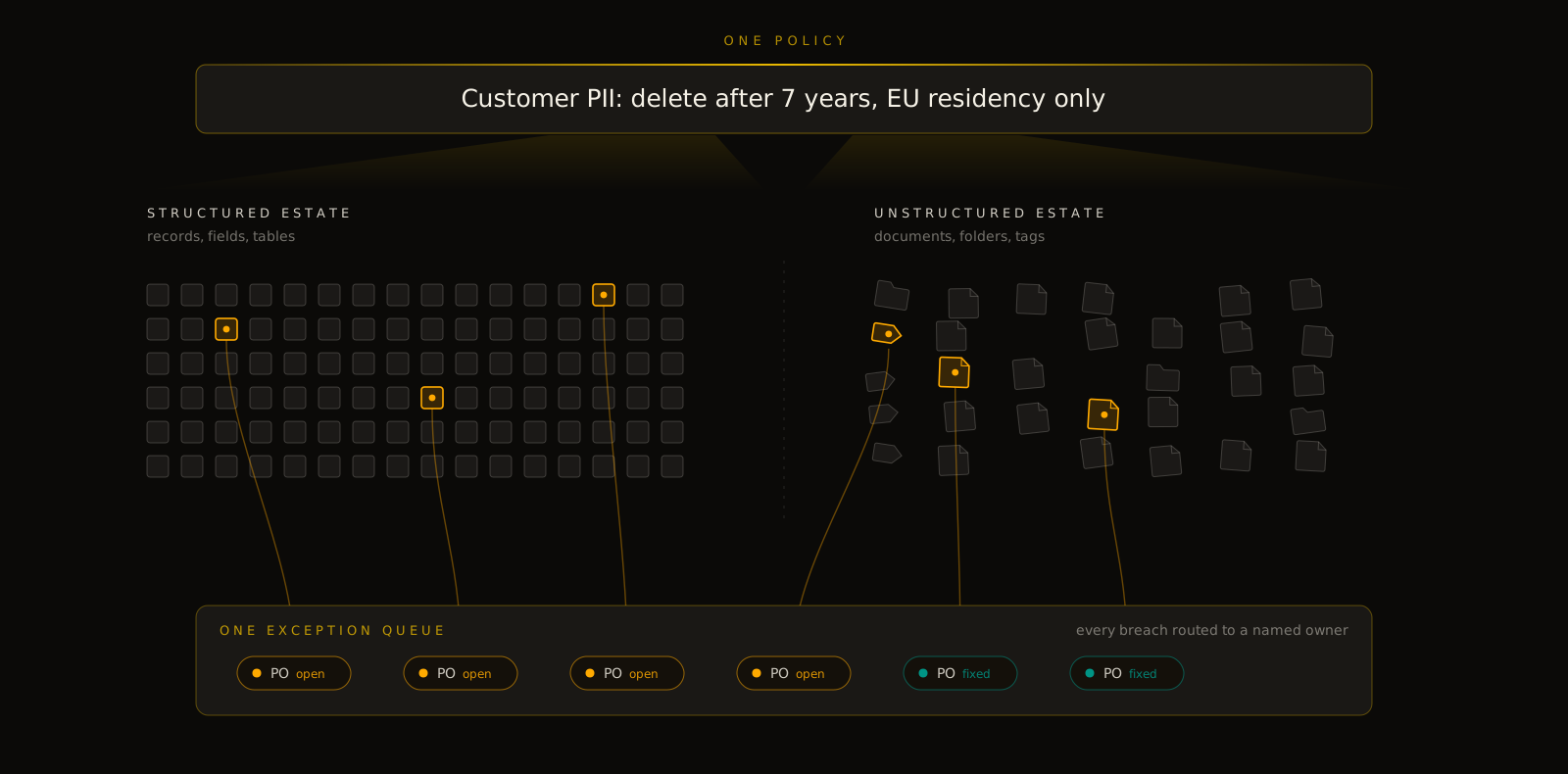
Master data, records and fields
Residency, retention and ownership rules enforced on the systems of record. The same customer, supplier and site resolved across every spelling and every system, so the policy applies to the entity, not to whichever copy the audit happened to sample.
Documents, content and tags
Classification, retention and residency on the corpus itself. Nexus sees every document the policy covers, so a file on a share drive is as governed as a row in the warehouse, and a breach in either one looks the same to the owner who has to fix it.
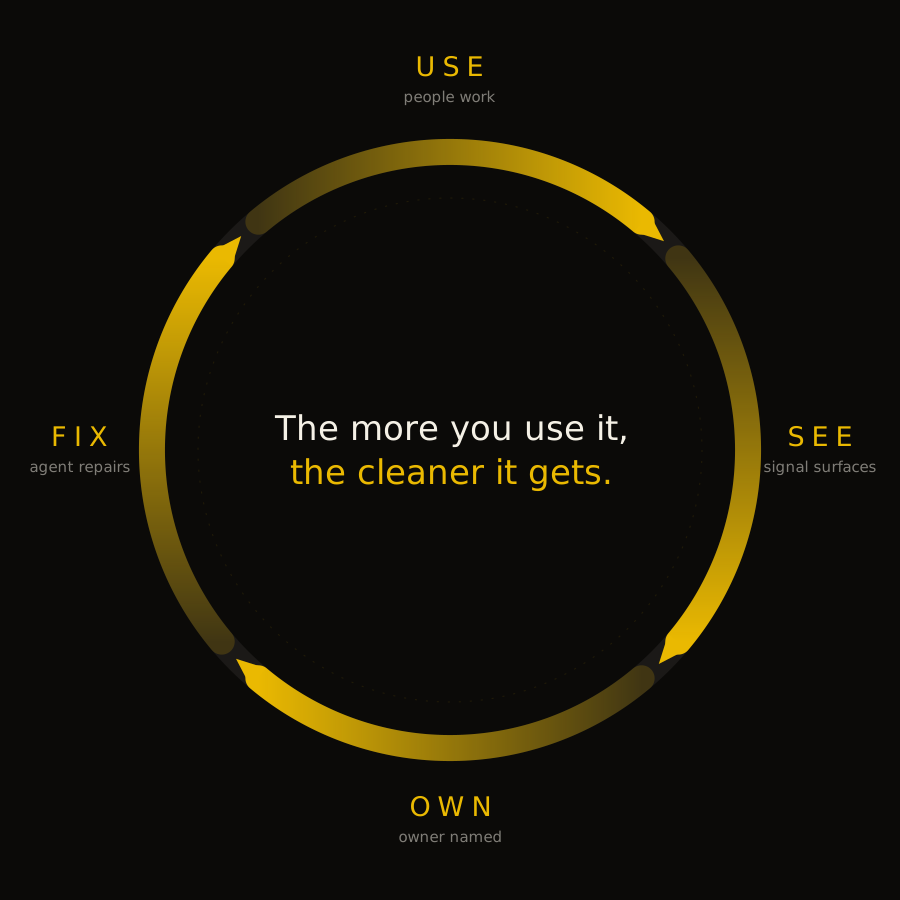
The more you use it, the cleaner it gets
Policies live in Nexus admin. Every question asked through Nexus widens what the policy can see; every breach surfaced gets an owner; every approved fix is executed by governed agents and recorded. Data quality stops being an annual programme and becomes a side effect of daily use.
From policy on paper to policy enforced in the corpus
 Nexus
NexusThe catalogue describes schemas, not conformance. Nobody can ask the estate where the policy is breached and get an answer.
Every document, record and field resolved into entities, owners and applicable policies. Ask where PII sits outside the EU, in plain language, and get a cited answer computed inside your own permissions.
 Pulse
PulseConformance is checked by sampling, once a year. The estate is breached daily in between, and the audit describes last year’s estate.
Retention, residency, classification and ownership rules written in plain English and evaluated across the whole corpus, always. Every breach becomes one severity-scored exception routed to the named data owner.
 Foresight
Dashboards count defects after they have already corrupted a decision. There is no forward view of which data breaks what next.
Defects are linked forward to the forecasts, alerts and reports they feed. Models rank where drift, duplication and decay will surface next by decision impact, so the clean-up effort follows consequence rather than volume.
 Horizon
Remediation runs as heroic one-off projects that relapse by the next quarter. No trajectory, no attribution, no proof anything moved.
Model the campaign before funding it, track days to conformance as actuals land, and let governed agents execute the approved fixes. Reclassify, tag, quarantine, dedupe, archive. Permissions, budgets and audit are inherited by construction, and every change carries its approval.
Turning data governance into decisions
The same customer, supplier and document exist under different spellings in different systems, so no policy can be applied to "the" record.
NexusConformance is sampled once a year, so breaches live in the estate for months before anything notices.
PulseThe policy changes, and nobody can say which repositories, retention schedules and classifications the change touches.
Nexus PulseDefect counts describe the past. The defects that matter are the ones about to corrupt a live decision.
ForesightRemediation is a spreadsheet of tickets nobody closes, and no one can prove what was fixed, by whom, on whose approval.
Horizon Nexus12 AI applications that could be relevant
A sample of what becomes possible on the decision layer, not a fixed list: each application draws on the same data foundation and audit trail, and new ones are configured on the engines, not built from scratch.
Every document, record and field in the estate resolved into entities, owners and the policies that apply to them.
Ask where customer PII sits outside approved systems and get a cited answer, scoped to your clearance.
Approved remediations executed by governed agents that inherit permissions, budgets and audit by construction.
Write retention, residency, classification and ownership rules in plain English and have the corpus watched continuously.
Every policy breach becomes one severity-scored exception, routed to the named data owner.
Every breach carries its fix status; unresolved exceptions escalate instead of expiring.
Where drift, duplication and decay will surface next, ranked by the decisions they would corrupt.
The repositories and flows most likely to yield the next policy breach, with the drivers behind each.
Data defects linked forward to the forecasts, alerts and reports they feed, so quality effort follows consequence.
Model a remediation campaign before funding it: coverage, effort and time to conformance.
The date the estate reaches policy conformance at the current fix rate, updated as actuals land.
Which remediation moved the conformance number, on the record, with attribution.
A day in a governed data estate
Today: "Where is our PII?" is a quarterly project across four teams.
NexusShe asks where customer PII sits outside approved systems. A cited answer, computed inside her clearance, in seconds.
Today: Breaches surface in the annual audit, a year after they happened.
PulseA retention rule she wrote in plain English fires on a share drive. Scored, routed to the system owner, clock running.
Today: Clean-ups are funded on argument and relapse by the next quarter.
HorizonTwo campaigns modelled against days to conformance. She funds the one that shortens it.
Today: Remediation is a ticket queue nobody closes.
NexusThe approved actions execute agentically across the corpus. Retag, quarantine, archive. Every change lands on the audit trail with her approval attached.
Conformance stopped being a claim. It became a number with a date on it.
Govern the estate. Then ask it anything.
Data Governance
Govern the estate: every record and document read against the policy, every breach owned and fixed.
Enterprise Search
Ask the estate: cited answers computed inside your permissions, from the same governed corpus.
Explore Enterprise Search →Enforce the data policy, not publish it
We agree the metric and the baseline in week one, and measure the result on your data.